

Quick Summary
You can't spot reduce perimenopause weight gain, but you can build muscle, speed up your metabolism, and improve your body composition with a strategic strength training plan.
Seeing the scale creep up during perimenopause is, unfortunately, a pretty common occurrence. Many women find that the weight loss strategies that worked for them in their 20s and 30s suddenly seem less effective.
It’s common for women to experience weight gain around the midsection along with lower energy levels and a decline in muscle mass. Naturally, women start searching for the best exercise to battle perimenopause weight gain.
But here, the thing; there isn’t a single exercise that magically targets and eliminates perimenopausal weight gain, but there is a specific exercise modality that consistently stands out: strength training.
Why Weight Gain Happens During Perimenopause
Before we talk about how to combat weight gain during perimenopause, let’s discuss why it happens. Perimenopause brings a variety of hormonal changes that can influence your body composition. Many women experience:
- A gradual decline in estrogen
- Changes in insulin sensitivity
- Reduced muscle mass
- Lower daily energy expenditure
- Increased stress and disrupted sleep
The combination of these factors can make it easier to gain weight and harder to lose it. And despite what you may have been led to believe, the solution isn’t just to exercise more; it’s to exercise smarter. This is where strategic strength training will come into play.
Why Strength Training Is the Best Exercise for Perimenopause Weight Gain
If your goal is long-term body composition changes (aka decreasing body fat and increasing lean muscle mass), strength training should be the bread and butter of your fitness routine.
Strength training offers a tremendous amount of benefits, including helping you to:
- Preserve muscle mass
- Build strength
- Support metabolism
- Improve insulin sensitivity
- Lose body fat
- Maintain bone health
- Improve daily function and mobility
Unlike cardio, strength training sends a very strong signal to your body telling it that muscle is required and that it must work hard to keep it. Stimulating your body to build muscle becomes increasingly more important during perimenopause when muscle loss naturally begins to accelerate.
The Best Strength Training Exercises for Perimenopause
Despite what social media may try to lead you to believe, there really aren’t any isolated movements that target perimenopause weight gain, but rather it's the prioritization of compound exercises that delivers the best results. Essentially, it’s focusing on the tried and true basics and repeating them.
Some of the most effective lifts include:
Squats
Squats strengthen the glutes, quads, hamstrings, and core while helping maintain lower-body muscle mass.
Romanian Deadlifts (RDLs)
This exercise targets the posterior chain, including the glutes and hamstrings, which are some of the largest muscles in the body.
Rows
Rows strengthen the upper back and help improve posture, which many women notice changing as they age.
Shoulder Presses
Overhead pressing builds upper-body strength and supports functional movement patterns.
Lunges
Lunges challenge balance, coordination, and lower-body strength all at once.
When strategically paired together with proper volume and intensity, these exercises are far more beneficial for muscle gain and body fat loss than constantly trying every new “trendy” exercise that’s supposed to help spot-reduce.
What About Walking?
Walking always desires a place in the perimenopause weight loss conversation. While strength training should be your foundation, walking is your complement. Women in perimenopause don’t realize how much we slow down and get more sedentary, but adding intentional walking can help:
- Increase daily calorie expenditure
- Improve cardiovascular health
- Reduce stress
- Support recovery
- Improve insulin sensitivity
For many women, a combination of strength training and daily walking is more sustainable and more effective than high-intensity cardio programs.
Is Cardio Necessary?
Cardio will always have its benefits, but intense cardio (think running, HIIT, spin classes) isn’t necessary. Many women in perimenopause make the mistake of responding to perimenopause weight gain by adding more and more cardio and neglecting strength training. Unfortunately, this usually backfires pretty hard.
Excessive cardio without strength training may make it more difficult to preserve muscle mass, which is one of the most important factors for supporting your long-term metabolism. Instead of viewing cardio as the solution to your weight gain, consider it a complement to your strength-focused routine.
How Often Should You Strength Train During Perimenopause?
Most women discover great results and benefit from strength training three to five times per week. The ideal number for you will depend on:
- Recovery
- Schedule
- Experience level
- Lifestyle factors
When it comes to strength training during perimenopause, consistency will matter far more than intensity. It’s less about what sounds ideal and more about what’s actually realistic for you to maintain long-term. A sustainable schedule will always outperform an aggressive plan that you abandon after a few weeks.
The Missing Piece: Nutrition
Exercise during perimenopause is important, but it's only one piece of the puzzle. Most women experiencing peri-menopausal weight gain will also benefit from focusing on:
- Adequate protein intake
- Fiber-rich foods
- Eating a diet of mostly whole foods
- Consistent meal patterns
- Hydration
- Sleep quality
Typically, the most effective approach combines strength training, daily movement, and nutrition habits that support muscle retention, energy, and recovery.
Closing Thoughts
If you’re frustrated by perimenopause weight gain and are looking for the best exercise to combat it, the answer isn’t going to be found in a single exercise. It’s going to be found in a consistent and thoughtfully designed approach to strength training.
Basic exercises like squats, deadlifts, rows, presses, and lunges are going to be your best bet at preserving and building muscle, supporting your metabolism, and improving your overall body composition during this stage of life and beyond.
Pair a well-structured strength training routine with regular walking/movement, adequate protein, and consistency, and you’ll have a solid foundation for maintaining and improving your health and fitness through perimenopause and beyond.
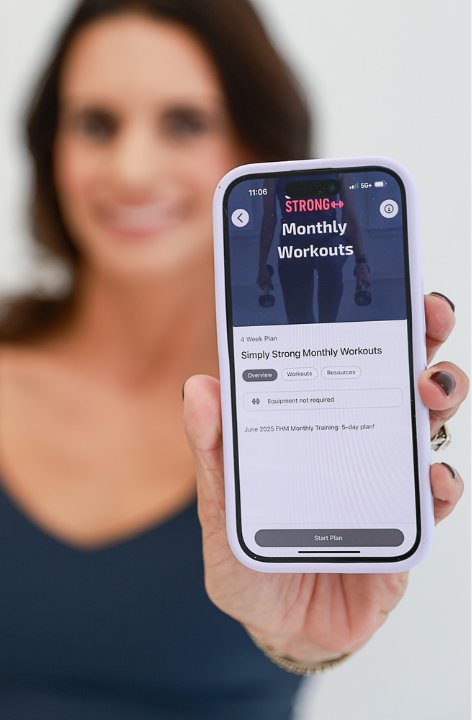
If you want to start a strength training program that’s designed for women over 35 and begin taking back control of your body, join us in the Simply Strong App, where you’ll be surrounded by women working toward similar goals.