
Beginning a new strength training journey can feel exciting, intimidating, and even a little overwhelming at first - especially if you’re in mid-life or it’s been a while since you picked up weights. The first month is all about learning, discovering, and adapting. And, to be honest, it doesn’t always match the expectations many women have about what getting stronger should look and feel like.
Week 1: Learning the Movements
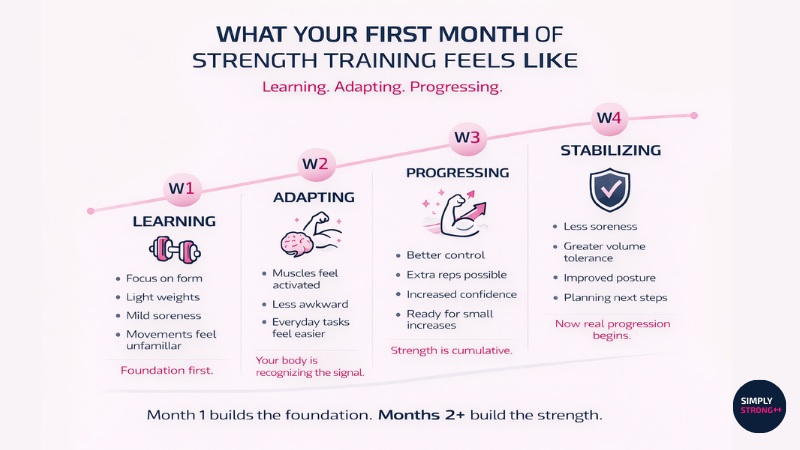
In your first week of strength training, most of your energy and effort should go toward learning and understanding the exercises so you can execute them with proper form before you start building strength within them. Some movements might feel a bit awkward or unfamiliar at first, even if they look simple in videos. This is because your body is learning new movement patterns, all of which require stability and coordination.
Some muscle soreness is common when exploring new exercises and adding load (weight), but it shouldn’t be extreme, as the goal isn’t to pick up your heaviest weights on week 1; it’s to choose a light enough weight (or no weight at all) to be able to practice the movements with good form. The key during your first week is to focus on form and control, seek deeper understanding where needed, and build a solid foundation that you will be able to build upon in the weeks to come. That's the power of learning the basics of strength training.
Week 2: Feeling Muscles Work Differently
By your second week of strength training, your body will begin to recognize the stress of strength training. If you’re following a progressive overload-focused program (which you should be), you will be repeating the same exercises that you did the week before, but this round, your muscles will be more adapted.
That being said, you may begin to notice that the muscles you rarely use feel worked out in a way that you haven’t experienced before. You also may notice that everyday activities like carrying groceries or standing up from sitting may be starting to feel a bit easier, thanks to the new awareness of your muscles.
During week 2, it’s normal to feel a mixture of excitement and slight discomfort as your body continues to adjust to the new stimulus and you start to feel the results of making training your muscles a priority.
Week 3: Early Signs of Progress
Week 3 is usually where subtle improvements start to make themselves noticeable. Exercises that felt awkward and challenging at first are now starting to feel more manageable and comfortable. You might notice that you can maintain control for a few more reps than you could in weeks one and two, and that your posture, stability, and confidence during exercises have improved. Mentally, you start to grasp that strength is cumulative, meaning it is through consistent effort that you begin to see payoffs in small but measurable ways.
Week 3 is also a good time to start thinking about progression - this can come in many forms. Progressive overload can be applied by slowing down your reps, adding weight, adding reps, or adding sets. This is placing additional load on your muscles that have already gotten used to the movements, but the application of more will continue to push your muscles to adapt (growth and strength).
Week 4: Adapting and Planning Next Steps
By the end of your first month of consistent strength training, your body has adapted to a baseline level of strength. You should feel significantly less sore than you did in week one, and you should be able to handle more volume. You’ll also notice that you have more stability and greater confidence in the exercises you’ve been performing all month.
For many women, the last week of their first month of strength training is typically where their mindsets shift from “can I even do this?” to “how can I continue to get stronger?” This is a great place to be, as now you can really start to think about progressive overload, keeping your momentum and consistency up, and the bigger picture of long-term strength and health.
What to Expect Emotionally
Your first month won’t be marked with just physical growth, but mental and emotional, too. You might feel a mix of pride, surprise (you’re stronger than you think!), and maybe even a little doubt. Strength training challenges your body physically, but also mentally. It’s not the type of fitness that will leave you drenched in sweat and feeling completely exhausted; it takes time, patience, and trust in the process to see changes. But when you understand that adaptation happens gradually and that the work you’re doing will set you up for long-term health and longevity, it’s easier to stay committed.
Midlife Perspective
For women in midlife, the first month may feel a tad slower when compared to younger lifters, but the benefits are just as significant. Every rep you complete builds strength, improves joint health, and supports your metabolism. Midlife women, especially, should focus on creating a sustainable habit of strength training that will compound over months and years, rather than seeking quick results.
A lot of women in midlife grew up with a “more is better” mentality that can leave them feeling like strength training isn’t enough, but the truth is, consistent strength training done repeatedly will net far better results than high-intensity cardio-based classes and workouts. The contrast between sweaty and effective workouts becomes really important during this stage of life.
Key Takeaways
- Soreness is normal, but coordination and control matter more than intensity.
- Small improvements in stability, posture, and confidence are early signs of progress.
- The first month is about establishing habits, learning movements, and preparing for intentional progression.
- Midlife bodies adapt differently (usually a bit slower) - focus on consistency and sustainable overload rather than rushing for big lifts.
Starting strength training is a journey, and the first month sets the stage for everything that comes after. If you stick with it, learn the movements, and celebrate small wins, you’ll find that the second month and beyond feel more confident, capable, and strong, and that the results you’re seeking will be inevitable.