
Quick Summary
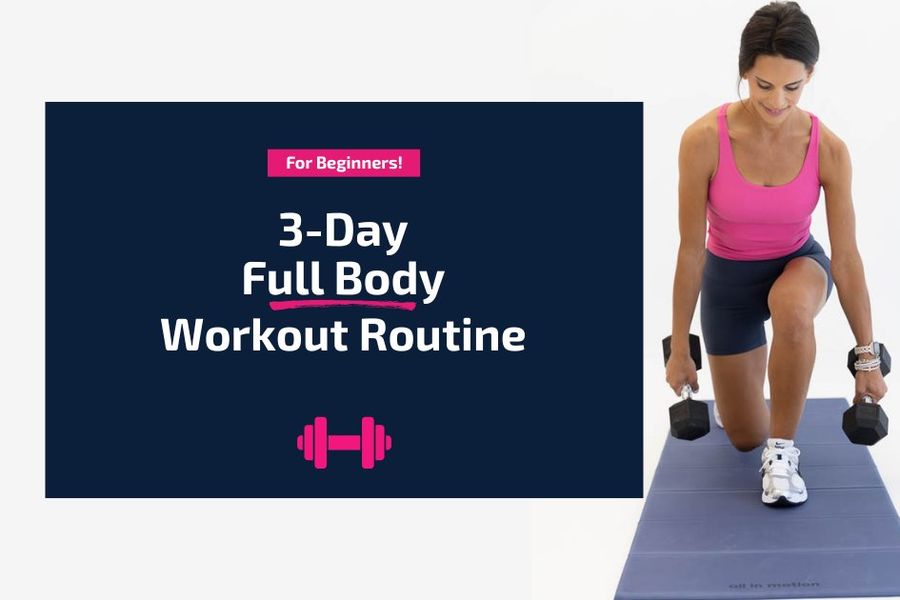
For women looking for a 3-day full-body workout routine to get started with strength training, this article outlines what that routine could look like and who it's a good fit for. Plus, we give a sample 3-day routine!
Beginning a strength training journey can feel overwhelming at first. Many women have questions like:
How many days should I work out? What exercises should I do? Do I need a complicated or specific split to see results?
The good news is, you don’t need an advanced routine to get stronger and see results. In fact, for many women, a simple 3-day full-body workout routine is one of the best ways to start strength training, especially if you plan to do it from home.
3-day full body splits are effective, manageable, and they give your body enough consistency to build strength without feeling overwhelming.
Why Full Body Workouts Are Great for Beginners
Full-body workouts are great because they train all major muscle groups in a single session. Instead of splitting your workouts into muscle-group specific “splits.”
That means that instead of splitting up your workouts into separate upper body and lower body days, you’ll work your:
- Legs
- Glutes
- Back
- Chest
- Shoulders
- Core
multiple times throughout the week in each of the 3 workouts you do. This setup is ideal for beginners because:
- You practice movements more often
- You build coordination faster
- You don’t need to train every day (and you get 4 rest days)
- It’s easier to stay consistent
For some women, especially those over 35, full-body workouts also feel more efficient and realistic for busy schedules.
How Often Should Beginners Strength Train?
For most beginner women, 3 days per week is a great starting point. This gives your body enough training stimulus to progress and enough recovery time between workouts. For women seeking a 3-day full-body workout plan, your weekly schedule might look like this:
- Monday: Full Body
- Wednesday: Full Body
- Friday: Full Body
This schedule helps create consistency without leading to burnout and over-training.
What Makes a Good Beginner Workout?
- A good beginner strength training workout should include the following:
- Basic movement patterns
- Cues for proper form
- Controlled reps
- Gradual progression over time
Things that will over-complicate a beginner workout include adding advanced exercises, long workouts, trying to lift too heavy before nailing down proper form, and complicated programming. The goal is to master the basics and build a solid foundation before adding the fancy stuff.
3-Day Full Body Workout Routine for Beginner Women
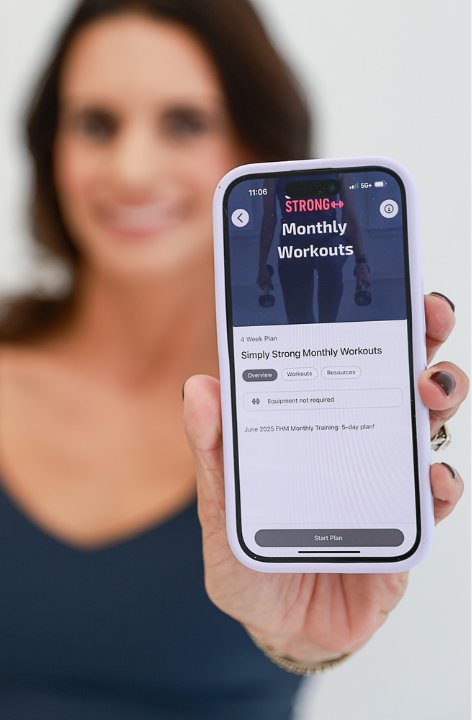
Below is an example of a 3-day full-body workout routine for beginners. This is the exact type of full-body workout you can expect to find in the Simply Strong App.
Day 1
- Goblet Squats: 3 x 10-12
- Dumbbell Romanian Deadlifts: 3 x 10-12
- Dumbbell Shoulder Press: 3 x 10-12
- Bent Over Rows: 3 x 10-12
- Glute Bridges: 3 x 12-15
- Dead Bugs: 3 x 10 each side
Day 2
- Reverse Lunges: 3 x 10 each side
- Dumbbell Chest Press: 3 x 10-12
- Single Arm Rows: 3 x 10 each side
- Step Ups: 3 x 10 each side
- Lateral Raises: 3 x 12-15
- Forearm Plank: 3 x 20-30 seconds
Day 3
- Sumo Squats: 3 x 10-12
- Dumbbell Deadlifts: 3 x 10-12
- Incline Push-Ups: 3 x 8-10
- Hammer Curls: 3 x 10-12
- Glute Bridges with Pause: 3 x 12
- Bird Dogs: 3 x 10 each side
How Heavy Should Your Dumbbells Be?
The dumbbell weight you select will be dependent on your strength and equipment availability. The weights you select should feel challenging by the final few reps without sacrificing form.
A good beginner starting point is often:
- 5-15 lb dumbbells for upper body exercises
- 10-25 lb dumbbells for lower body exercises
The best weight is the one that challenges you while allowing you to maintain control.
How Long Should These Workouts Take?
Most beginner full-body workouts like the ones outlined above take between 30 and 40 minutes, on average. Your workout doesn’t need to be an hour-long for it to be effective.
In fact, shorter, more structured workouts done consistently are often more effective in the long term than longer ones that are only done occasionally.
How to Make Progress Over Time
An important part of effective strength training is progressive overload, which is getting stronger over time. When an exercise starts to feel easier, you can gradually increase the load by:
- Increasing weight
- Adding reps
- Improving your form
- Slowing down the tempo
- Adding an extra set
This gradual progression is what helps your body continue building strength and make the body composition changes you’re seeking.
Why Beginners Shouldn’t Constantly Change Workouts
One of the biggest mistakes beginners make is doing completely different workouts every day, aka “no-repeat” workouts.
Repeating movements is how you:
- Improve form
- Build strength
- Gain confidence
- Track progress
You do not need “muscle confusion,” you need consistency and progression.
What Kind of Results Can Beginners Expect?
Within the first few weeks of consistent strength training, many women begin to notice:
- More energy
- Increased confidence
- Improved strength
- Better stability and coordination
Physical changes often take a bit more time to become visible, but that doesn’t mean change isn’t in process. The key is to stick with it for long enough for the results to show up. And with a commitment as minimal as 3 full-body workouts per week for ~30 minutes, it’s easier than you think to stay consistent and see results.
Final Thoughts
A 3-day full-body workout routine is an excellent way for many women to start their strength training journey. It’s a simple, effective, and realistic way to incorporate strength into your routine without making dramatic changes to your lifestyle.
If you’re looking for a plan that offers 3-day full-body workout routines, give the Simply Strong App a try. Take the 2-minute quiz to see if it’s a good fit, and you’ll get 50% off your first month.