

One of the most common questions women ask when they are beginning a strength training journey is: How often should I be doing this to see results?
It’s natural to assume the answer would be “as often as possible.” More workouts, more effort, more results, right? Not when it comes to strength training, especially for women over the age of 35.
The goal for strength training is not to do the most, it’s to do enough to produce progress and results while still allowing your body to recover and adapt.
The Short Answer
Generally speaking, most women see tremendous benefits and great progress with 3-5 strength training sessions per week. This provides your body with the right balance of stimulus (the workouts themselves) and recovery (the time when your body actually gets stronger).
Anything less can still be beneficial, especially if you’re just starting out or are working around an injury. Anything more isn’t necessarily better if you don’t have the recovery time to support it.
Why You Don’t Need to Train Every Day
Muscle is built during recovery, not during the actual workout itself. While strength training, you’re creating a stimulus. Your body then uses rest, nutrition, and recovery time to adapt, grow, and get stronger.
If you train the same muscles too frequently without ample recovery, you can end up feeling really fatigued, sore, and stuck, even when you’re working really hard and being really consistent. This is one of the most frustrating places to be.
But that’s why we have to take a better approach. More is just more, not necessarily better.
What Different Frequencies Can Look Like
When it comes to finding the “right” number of days, it’ll vary on a number of factors like your schedule, experience, and goals.
If you’re just starting out, 2-3 days of strength training per week is a great place to start. This approach allows you to learn the basic strength training movements, build consistency and confidence, and avoid feeling overwhelmed.
If you’ve been training for a while, 3-4 days per week tends to be the sweet spot for most women who are looking to build strength and noticeable body composition changes.
For those who like doing a bit more, 5 days per week can work, but only if the workouts are structured properly, aren’t aggressively long, and when recovery is prioritized.
Full Body vs “Split Training”
Another consideration is full body vs split training. Full body workouts are workouts that work all your muscle groups at the same time, whereas “split training” workouts are workouts that focus on one or a couple of muscle groups at once.
If you’re doing full-body workouts, you can train 3-4 days per week and hit all of your muscle groups with plenty of volume.
If you prefer a training “split,” you can also cover all your muscle groups within 3-4 days, but it’ll depend on your preferences. I recommend training a minimum of 3 days for split workouts, prioritizing lower body, upper push (shoulders, chest, triceps), and upper body pull (back & biceps). You can add a fourth or even a fifth day in there to get extra lower body work and a full body workout to round out your week.
Why This Matters More in Midlife
As we age, recovery becomes just as important as the workout itself. Between hormonal changes, sleep quality, and overall life stress, this period of life carries a lot, and it can have a huge impact on how your body responds to training. This often means that pushing harder or training more frequently doesn’t always lead to better results, as may have been the case in your younger years.
Instead, your body begins to respond best to:
- Consistent, structured training
- Gradual progression over time
- Adequate rest and recovery between sessions
- Built-in mobility, stretching, and warm-ups to help prevent injury
What Matters More Than Frequency
While frequency plays an important role in the results you can expect from strength training, it’s not the only piece of the puzzle. What matters most is:
- Whether or not your workouts are structured and efficient
- Whether or not you’re being intentional about your weight selection and intensity during each exercise
- Whether or not you’re progressing over time
- Whether or not you’re allowing yourself enough time to rest and recover between sessions
Without these other pieces of the puzzle, you could be training 5-6x per week and still not see results, which would be a huge bummer. On the other hand, you can train just 3x per week with the right plan and approach and make significant progress.
A Simple Way to Think About It
Here’s a really simple way to approach the topic of how often you should train as a female: If you’re consistent with 3-4 well-structured strength workouts per week, you’re doing enough.
Once you establish that routine, you can then focus on these important parts of the success equation:
- Getting stronger within those workouts
- Repeating movements long enough to improve them
- Allowing your body ample time to recover
Nail these things, and results are inevitable.
Closing Thoughts
Most women don’t need more workouts; they need more intention behind their workouts. This is especially true for women over 35. Strength training 3-4 times per week is more than enough to build strength, support body composition, and create long-term results - especially when your workouts are structured, intentional, and progressive.
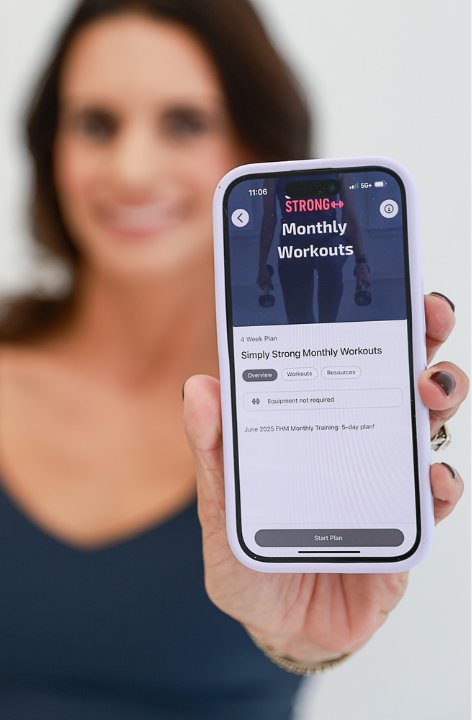
You don’t need to do the most; you just need to do enough of what works. And if you’re looking for a plan that understands the needs of women in midlife with busy schedules, give the Simply Strong App a try.