
Whether you’ve been strength training for a while or you’re a beginner, you’ve undoubtedly heard the term “progressive overload” pop up. It gets talked about a lot, and oftentimes it can make strength training feel more complicated than it actually is, and there are certainly no shortages of opinions on what it is and how to do it.
So it’s a fair question to ask whether or not progressive overload is actually necessary or whether you can just work out consistently and still see results. The answer isn’t cut and dry, but it’s important to understand some key concepts so you can make sure you’re training in the most efficient and effective way possible.
What Progressive Overload Is
Progressive overload is simply gradually increasing the challenge placed on your body over time. The challenge can be found in many forms, including;
- Lifting heavier weights
- Doing more reps
- Adding extra sets
- Slowing down the tempo
- Improving overall form and control
What it doesn’t mean is pushing harder every single workout or expecting to constantly be increasing intensity. Really, it just means that your workouts don’t stay the same forever, as you’re always looking to improve and advance.
What Happens If You Don’t Use It
Here’s the thing: your body is designed to adapt - which means it gets really used to what you’re doing with it and then optimizes to maintain homeostasis. But the goal of weight training is not usually to maintain, it’s to improve, grow, and get stronger.
If you do the same exercises with the same weight, reps, and structure over and over again, your body will become really efficient at that level of effort. Things will start feeling easier, which can feel like progress, but eventually, everything will level off, and progress will stop. And this is where so many women start to feel stuck.
There’s nothing more frustrating than working out consistently but not experiencing results that match your effort. Without progressive overload and a structured plan in place, your body doesn’t have a reason to keep building strength or change body composition. With continued consistency, you’ll maintain what you’ve built, but you won’t move forward.
Consistency is Great, But It’s Not Enough
No matter what, consistency is key, but it’s just one piece of the puzzle. You can show up to workouts every week and still stay at the exact same place if the workouts aren’t becoming more challenging over time. This is where no-repeat workouts come into play. Workouts that are different every time can feel fun and exciting, but it’s hard to make measurable progress with them because you’re always changing things up.
Again, this is why women start to feel frustrated in their fitness journeys - they’re showing up and getting their sweat on, but the results are lacking. This is a clear sign that it’s time to change strategies and seek a more structured, progressive plan because it’s not a lack of effort; it’s a lack of progression at play.
What Progressive Overload Looks Like in Real Life
Although the concept of progressive overload can feel daunting and overwhelming, it’s not. In real life, progressive overload at home isn’t complicated or extreme; it’s small, simple changes over time.
Here are some examples:
- If last week you did 8 reps of an exercise, this week you could try for 10 reps of that same exercise.
- If last week you used 10 lb dumbbells for an exercise, this week you might try for 12 lb dumbbells.
- You do one more set of an exercise than you did last week.
- You complete the exercise with more stability and control than you did before.
These are small changes, but over time, they add up to real strength gains and visible results.
Why This Matters More For Women Over 35
For women in midlife and beyond, progressive overload becomes increasingly important. This period of time is marked by hormonal changes that can make it a lot easier to lose muscle and overall strength and a lot easier to gain weight. At the same time, recovery begins to matter a lot more, and constantly pushing for more becomes a lot less effective. This is not the time to just keep doing “more,” it’s the time to do better and with more strategy.
This is where the “work smarter, not harder” principle applies. Instead of relying on intensity or exhaustion to gauge your workout success, you need to start relying on strength and progression to measure your progress. This requires having a clear path for your body to adapt in a meaningful and sustainable way.
So, Is Progressive Overload Necessary?
Well, it depends on what your goals are. If your goal is to maintain your current level of fitness, then you can get away with not applying progressive overload. However, if your goal is to get stronger, improve your body composition, and continue to see results over time, progressive overload is essential.
Progressive overload is simply giving your body a reason to keep changing, which is what most of us are looking for on our strength training journeys. So long as you keep it simple and don’t put too much pressure on yourself, you’ll find that progressive overload is a key component of a solid strength training program, and it’s likely the puzzle piece you’ve been missing.
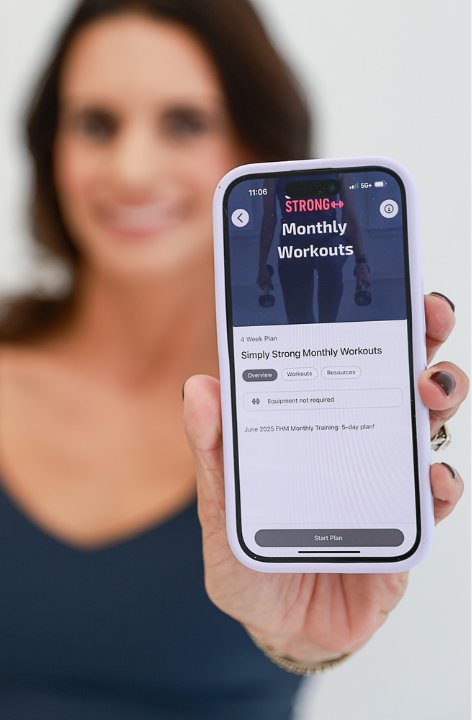
If you’re ready to turn your consistency into real results, join us in the Simply Strong App, where progressive overload is encouraged and built in for you.