
Strength Simplified for Women!
At some point, most women start to feel a shift in their body’s response to exercise around the midlife mark (age 35+). And if this is you, you’re not imagining this shift, and you’re not alone. This is often the season when women begin to realize that the exercise and weight loss strategies that once worked no longer deliver the same results.
Fat loss starts to feel harder. Muscle mass becomes harder to maintain. Recovery takes longer. And energy fluctuations start to become more apparent than ever. For many women, this is also the time when perimenopause starts to enter the conversation.
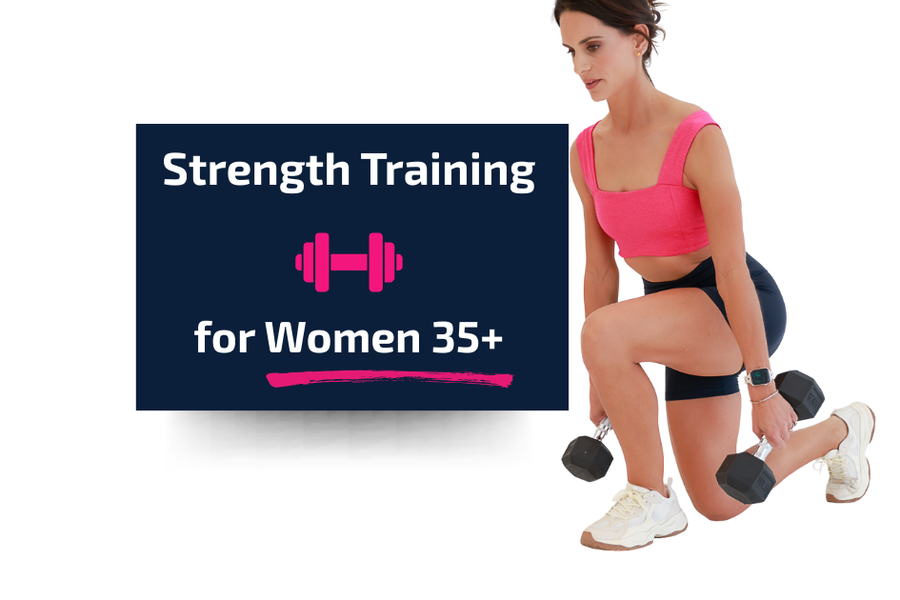
The answer, however, is not to hit the ground running with intensity, more cardio, or more restriction; it’s to shift your approach and maybe your perspective. Strength training becomes a pillar for women in midlife who want to feel healthy, strong, capable, and confident in their bodies.
But not just any strength training, it needs to be done in a way that supports your changing body, hormones, and life. There are some strength training basics for women in midlife that will make this entire process easy to understand and follow.
Why Strength Training Matters More in Midlife
As we move through our mid-thirties and beyond, we naturally begin to lose muscle mass if we’re not actively working to maintain it. This is caused by age, hormonal changes, and lifestyle factors, and it impacts far more than what your body looks like.
Muscle mass plays a key role in your metabolism, blood sugar regulation, joint stability, bone density, and your overall resilience. Weight resistance training helps to slow muscle loss, improve functional strength, and support your long-term health - especially during perimenopause when hormonal fluctuations can make the body feel unpredictable.
Maintaining and strengthening your muscle mass doesn’t require extreme workouts or hours in the gym. Rather, it requires consistency, intention, and a plan that includes some strength training basics and fundamentals for women in midlife.
What Strength Training Really Is (and What It Isn’t)
Strength training means using resistance to challenge your muscles so that they adapt and grow stronger. Resistance can come from anything - dumbbells, resistance bands, or even your own body weight. It can be done from home, on your own schedule, and without a lot of space or complicated equipment.
Efficient, effective strength training is not constantly chasing exhaustion or soreness. It’s not random workouts that change every day. And it’s not trying to turn every session into a cardio, calorie-burning workout.
In midlife, effective strength training focuses on repeating key movement patterns, allowing adequate recovery time, and gradually increasing the challenge over time.
How Progressive Overload Works at Home
Progressive overload is one of the most important, but also most misunderstood principles of strength training. It simply means giving your muscles a reason to adapt by slowly increasing the challenge placed on them.
At home, progressive overload is often subtle. You might perform an exercise with more control or better form than you did before. You might complete a few more reps, add an extra set, or increase your weights. But here’s the thing: none of these changes and adaptations need to be dramatic to be effective.
Progress and growth come from consistency and progression, not from constantly seeking to do something new. The concept that you need to “keep your muscles guessing” is false.
Why You Can Work Out Consistently and Still Not Feel Strong
There’s a point in most women's midlife journey when they start to feel frustrated by a lack of progress, despite being consistent. This is rarely a motivation problem; it’s usually more to do with the approach to fitness they’re taking.
When you’re following workouts that change constantly, you’re not giving your body the chance it needs to adapt. When strength work is rushed and treated like a cardio workout, your muscles don’t get enough stimulus to grow stronger. And when recovery and nutrition are overlooked (things that become even more impactful during perimenopause), results are often stalled.
Feeling strong and actually looking the part comes from focused, repeated effort over time, not from doing more or pushing harder - concepts that were ingrained in most midlife women throughout their teens and early twenties.
Eating to Support Strength Training During Perimenopause and Beyond
Strength training places real demands on your body, and those demands only increase during midlife and perimenopause. Under-fueling, not prioritizing protein, or chronically dieting can make recovery and building strength significantly more difficult.
Supporting your strength goals with your nutrition doesn’t require perfection or rigid rules. It simply requires that you eat enough to recover, prioritize protein to support muscle and satiety, and utilize carbohydrates to fuel your workouts and your daily energy needs. It’s understanding that food isn’t something to be earned or restricted, but rather an integral part of the process.
Strength Training While Using GLP-1 Medications
GLP-1 medications have become increasingly more common and show no signs of slowing down, and many women in midlife are navigating how to incorporate these into a healthy and balanced lifestyle.
Because the main goal of most women starting a GLP-1 journey is weight loss, and rapid weight loss can include muscle loss, strength training becomes even more important for women using GLP-1 medications as a tool on their journey. Appetite suppression can also make it more difficult to consume enough protein or overall energy, which directly affects recovery and the ability to maintain muscle and a healthy metabolism.
Strength training while taking a GLP-1 medication helps to protect lean muscle, support metabolism, and promote long-term sustainable and results. When paired strategically with adequate fueling and rest, it can be a powerful tool in your journey and one that shouldn’t be linked with shame or feelings of cheating.
How Often Should Women in Midlife Strength Train?
For most women in midlife, strength training just two to four times per week is both effective and realistic. More does not automatically mean better, especially during perimenopause when your recovery capacity can fluctuate a lot.
The goal of strength training in midlife is to feel challenged but also capable - not depleted and exhausted. Embracing rest days is a big part of the process. They’re not setbacks or failures, but a necessary part of the adaptation and growth process.
Why Go-At-Your-Own-Pace Strength Training Works Better in Midlife
Follow-along workout like Beachbody and FasterWay to Fat Loss can be really motivating, but they also come with pressure to keep up, move quickly, or push past fatigue. In midlife, that pressure can quietly undermine your consistency and recovery, hindering your results and ability to gain strength.
Workouts that are “go-at-your-own-pace” allow you to focus on form while adjusting your intensity based on how you feel that day. This style of workout allows you to fit your strength training into real life without feeling like you’re behind or needing to keep up with unrealistic expectations. Plus, when workouts work with your body, not against it, consistency becomes easier to maintain.
What Strength Training Success Really Looks Like
Strength training success in midlife isn’t defined by a number on the scale or perfect consistency. It’s defined by feeling stronger in your everyday life, moving more confidently, and trusting your body again. It’s about building strength that supports the life you’re living, not chasing an idealized version of fitness and what you think that should look like. It’s about being realistic about what’s maintainable while knowing that results are inevitable if you show up for yourself and have an effective plan to follow.
How Simply Strong Supports Women in Midlife
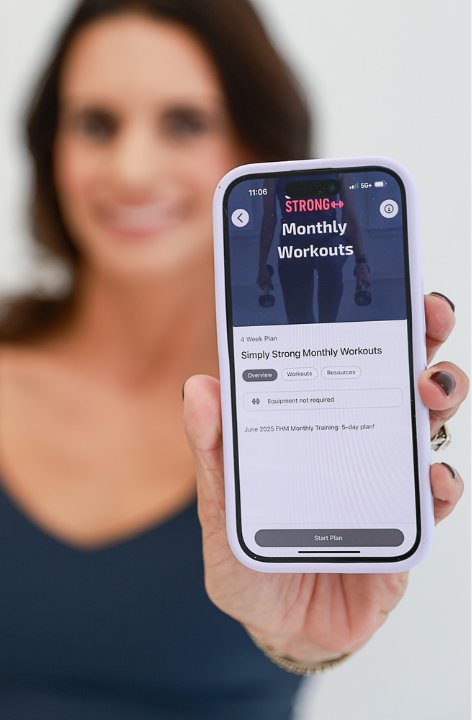
The Simply Strong App was created specifically for women navigating midlife and perimenopause. The workouts are home-based, requiring only dumbbells and bands, are structured, yet flexible, and are built around progressive overload but without any pressure or extremes.
Simply Strong is about strength training that meets you where you are and supports you where you’re going. It’s about leaning into the fact that you don’t need to do more. You don’t need to train harder. You don’t need to fight your body…You need strength training basics that support your changing body, honor your recovery, and fit into your real life. These are the foundations of strength in midlife, and that’s exactly what Simply Strong exists to help you build.