
Quick Summary
Is using ChatGPT good for creating strength training workouts? This article explores the benefits and pitfalls of using AI to create workout routines.
With AI tools like ChatGPT and Claude becoming more and more widespread, it’s no surprise that many women are asking: “Can ChatGPT create a workout plan for me?”
In short, the answer is yes. In fact, ChatGPT can generate a ton of workout ideas, explain fitness concepts, recommend certain exercises, and even build a pretty decent strength training routine in seconds. And for someone who is brand new to fitness or working with a tight budget, this can be incredibly helpful and lucrative.
But there are some really important distinctions between AI-generated fitness plans and those crafted by a real-life trainer with years of experience and expertise.
What ChatGPT Does Well
One of the biggest pros of using an AI system like ChatGPT or Claude is accessibility. You can ask the bot any number of questions regarding fitness, and it’ll spit back an answer almost immediately. Questions regarding strength training basics, like:
- How often should women strength train?
- What's a good 3-day workout split?
- What exercises best work the glutes?
- How can I build muscle at home?
For women who are just getting started, ChatGPT is a free way to help remove some of the confusion around fitness and getting started. It can also provide ideas, explain terminology, and point you in the right direction. This is all a positive thing and is definitely helping to make strength training more accessible to those seeking understanding and direction with it.
Where ChatGPT Falls Short
The challenge when working with any kind of AI data system is that it is generating a response based on patterns in the information it has learned from. It’s not actually doing the work; it’s pulling from information that already exists on the internet.
While this means that it can definitely produce a perfectly good workout or one-off program, it doesn’t necessarily have the ability to create a structured path forward, and that’s often where results are made. It also doesn’t have the knowledge and personal experience to craft programs that are uniquely designed.
Furthermore, these systems are pulling from information on the internet that may or may not be accurate or valid, but they don’t have a way to discern that either. So it’s very possible that you could be receiving less than optimal recommendations.
And, remember, AI is not foolproof or all-knowing. It’s a tool, but it’s not without flaws.
A Workout Is Not the Same as a Program
A lot of women make the mistake of looking for the perfect workout and don’t understand that the workout, in order to be effective, must be attached to a program. A workout is a single session; a program is the system behind those sessions.
A well-designed strength training program takes these things into consideration.
- Progressive overload
- Exercise selection
- Recovery
- Training frequency
- Weekly volume
- Long-term progression
In other words, this month’s workouts should connect to next month’s workouts, always building on what you’ve already built and accomplished because that’s how strength is developed over time.
The Difference Between Information and Programming
If there’s one thing that ChatGPT does really well, it’s providing information. If you prompt it to create a workout for you, you’ll get one. If you ask it for a list of exercises, you’ll get one. And if you ask for a workout split, you’ll most certainly get one.
But here’s the problem: most women aren’t struggling with fitness because they don’t have enough information; the internet is full of information (too much most days). What most women are actually seeking is structure and clear direction. They need to feel confident in the following:
- What workout to do today
- What workout to do next week
- When to increase weight
- How to progress an exercise
- How to know if they're improving
That's where a structured training program, built by a human with experience, becomes so valuable. Then, instead of asking technology to create a new workout every time you exercise, you’re following a structured plan that builds on itself over time. It’s not random, it’s intentional.
Why Progression Matters
One of the most important principles in strength training is progressive overload, which simply means that you’re gradually increasing the challenge placed on your muscles over time. This can look like:
- Increasing weight
- Adding reps
- Adding sets
- Slowing down the movement
- Progressing to a more challenging exercise variation
For example, you might begin with bodyweight squats, then move to goblet squats, then increase the weight, then add a pause or tempo, then add some reps…each step builds on the previous one. This is where generic workout generators fall short - they can create workouts, but creating a long-term progression strategy requires a higher level of planning and execution that the average person isn’t proficient at. You’ll be left guessing when to progress and how, which creates fitness uncertainty and self-doubt.
Why Human Support Still Matters
Let’s say you do end up using ChatGPT to create workouts for you, and things are going well; there are inevitably going to be some questions that pop up for you on your journey. You might wonder:
- Am I using the right weight?
- Is my form correct?
- What if I don't have the recommended equipment?
- What if an exercise bothers my knees?
- How do I know when to progress?
And, yes, ChatGPT can probably provide you with a standard answer, but it won’t be customized to you and your needs/goals. Sometimes, you simply need guidance from a real, live person with experience and knowledge. It doesn’t necessarily mean you need one-on-one coaching, but most women appreciate having access to a real trainer who can answer questions, provide clarification, and help them stay on track with their goals with confidence.
Community Is Something AI Can't Replace
While there are undoubtedly benefits to using AI, it’ll never be able to provide community, and let’s face it, fitness can feel really lonely. This is especially true for women navigating midlife, perimenopause, busy schedules, careers, parenting, and other responsibilities.
One of the most powerful parts of having a structured fitness program is being surrounded by other women who are working toward similar goals. A strong community can provide:
- Encouragement
- Accountability
- Shared experiences
- Motivation
- Perspective
AI can answer questions, but it’s not going to celebrate your first push-up or commiserate over a struggle or hiccup. AI will never be able to create the feeling that you’re a part of something that’s bigger than yourself. For many women, it's the sense of community and connection that becomes one of the biggest reasons why they stick with a program long-term.
So, Is It Okay to Use ChatGPT for a Workout Plan?
Of course, if that’s what you’d like to do. ChatGPT can be a useful tool for creating strength workouts and answering your questions. If you’re just starting out with strength training, it may be a good place to begin your exploration of strength training, as it can help you understand what it is and what it isn’t.
But keep in mind that if you’re seeking guidance, support, and a structured program that provides progression and long-term results, you’re far better off investing in a training program designed by a human personal trainer.
A log of times, the difference between just going through the motions and actually seeing results hinges on ensuring that you’re following a well-designed program and have proper support in place that’s individualized.
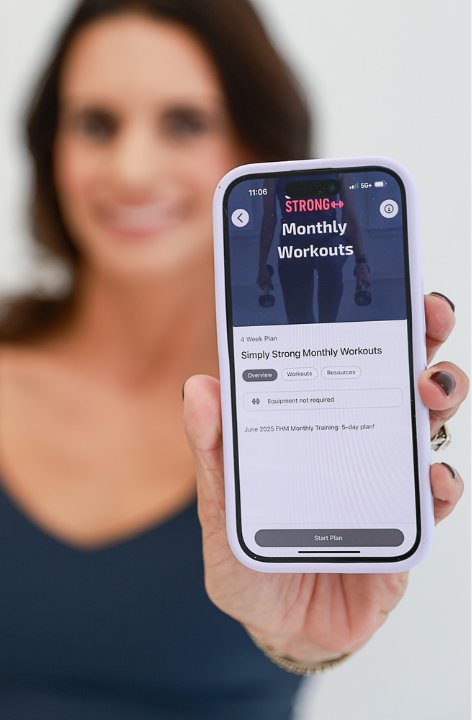
If you’re looking for a strength training program for women that’s hand-designed for results in minimal time, take our quick quiz to see if the Simply Strong App is the right fit for you and your goals. Aside from the workout programming and structure, the best part of the Simply Strong App is the community and direct access to your personal trainer, who’s there to support you every step of the way.