
Quick Summary
Choosing a strength training program shouldn’t come down to what looks hardest, trendiest, or most exhausting. The best program for women is structured, progressive, realistic, and repeatable, especially for women over 35 who need strength training that fits real life instead of wrecking them.
Deciding to start strength training is one thing, but figuring out which program to follow is where most women get completely stuck.
There are so many options - from apps and PDFs to YouTube and gyms, and they all promise results. It’s easy (and common) to feel overwhelmed or unsure if you’re choosing the “right” one for you.
The truth is, the best strength program isn’t the most complicated or intense one; it’s the one that’s structured, progressive, and realistic for your life and schedule.
What Most Women Get Wrong
So many women choose programs based on what looks exciting or challenging in the month. They go for the high-intensity workouts that look “effective”, programs that promise not to repeat (no-repeat workouts), or workouts that promise to deliver insane results (but are totally random).
While all of these workouts give the illusion of being productive, the problem is that they often lack structure. Without structure, it’s really hard to track progress. And without progress, it’s really hard to see results, even if you’re working hard.
Look for Structure First
A solid strength training program for women should follow a clear structure. This means that:
- Workouts are planned with intention (not random)
- Repeated movements over time (progressive overload)
- A clear layout of sets, reps, and rest
- A schedule that has built-in progressions
Structure is what turns workouts into something your body can actually adapt to. Adaptation is what drives results. You have to give your body a reason to grow, change, and adapt, and that’s best accomplished by following a structured plan.
Make Sure It Includes Progressive Overload
Progressive overload is one of the most critical elements to look for when choosing a strength training program. What this means is that the program should gradually increase the challenge over time. Progressive overload can be accomplished in a variety of ways, including:
- Increasing reps
- Adding weight
- Adding sets
- Improving form
- Adding a pause or slowing reps down
If your workouts feel the same every week with no clear progression, or if they’re totally random, your results will eventually stall, and you’ll end up feeling really frustrated.
Choose the Right Workout Split for You
Choosing a workout split (weekly training schedule) is an important part of selecting a strength training program. Realistically, most women can commit to 3-5 training sessions per week, with 4 usually being the sweet spot. This can look like any of the following:
- 3 days/week: full body or lower + upper split
- 4 days/week: 2 lower, upper push, upper pull
- 5 days/week: more volume + optional conditioning
There’s no “best” split; it really just comes down to the one you can stay consistent with over time. Many women make the mistake of committing to a training plan that requires a bigger sacrifice than they’re willing to make long-term and end up throwing in the towel. It’s always best to make a decision based on what’s realistic for your current stage of life. Ask yourself, “Can I see myself showing up for X amount of workouts each week over the next year?” If the answer is no, it might be a good idea to scale back a bit and stick with what you know you can maintain.
Make Sure It’s Realistic for Home (If You’re Training at Home)
A lot of women over 35 strength train at home because it’s most convenient for them. Midlife is often marked by busy schedules, kids, a home to keep, a career to maintain, etc. Trying to get out to the gym even a few times per week can be really daunting. But this is where home strength training workouts really come in.
If you’re planning to train from home, you’re going to need a program that’s designed for that. This means you should be looking for:
- Minimal equipment requirements (dumbbells, bands, bench/step)
- Exercise selections that are safe and effective and don’t require machines
- Clear instructions that can be easily followed from home
A lot of strength training programs assume access to a gym, but that’s not a reality for a lot of us, and a gym-based exercise program doesn’t always translate well to at-home workouts, which is why you should be on the lookout for a true at-home workout program.
It Should Feel Repeatable, Not Random
I know a lot of women were brought up on workouts that are different every time and that can feel really fun and exciting, but you should see the same movements repeated across weeks, so you can:
- Improve your form
- Build strength and muscle
- Track your progress
If every workout is completely different, it’s going to be hard to know if you’re actually getting stronger.
It Should Match Your Stage of Life
This is really important for women in midlife - we need a program that’s designed to support our bodies, not fight against them. Women over 35 should be looking for a strength training program that:
- Prioritizes strength over exhaustion
- Includes ample rest and recovery
- Doesn’t rely on frequent use of high-intensity training (some is ok)
- Focuses on sustainability
- Weaves in mobility and core strength
When it comes to resistance training in midlife, more isn’t better; more strategy is better. Start with the basic strength training movements that you can get better at over time.
Red Flags to Watch For In a Training Program For Women
There are so many amazing programs out there, but they’re not all created equally, nor will they all be a great fit for you.
Be cautious of programs that:
- Change workouts every single day
- Focus only on sweating or calorie burn
- Don’t include sets, reps, or progression
- Don’t include rest times or rest days
- Feel overwhelmed or unrealistic to keep up with
- Don’t discuss the specific needs of women over 35
These types of programs can fit in different stages of life, but in midlife, they often lead to burnout or plateaus.
What a Good Program Actually Feels Like
A good program doesn’t feel chaotic; it feels structured, repeatable, progressive, and manageable. You’ll finish your workouts feeling empowered and energized instead of bruised and battered. And you’ll feel stronger and more confident instead of just more tired.
With the right program, your workouts will start to feel more familiar, movements will be more controlled, and over time, you’ll start to see and feel the benefits of your consistency. Plus, the right program will feel sustainable for you. You won’t feel like you’re constantly struggling to keep up with the demands of it. Instead, it’ll feel like a natural, healthy habit that’s part of your weekly routine.
Wrapping Up
With social media, you now have more options and access to strength training programs than ever before, which is great, but can also be confusing. But choosing a strength training program doesn’t need to be complicated, you just have to know what to look for:
- Structure
- Progression
- Something that fits your schedule and lifestyle
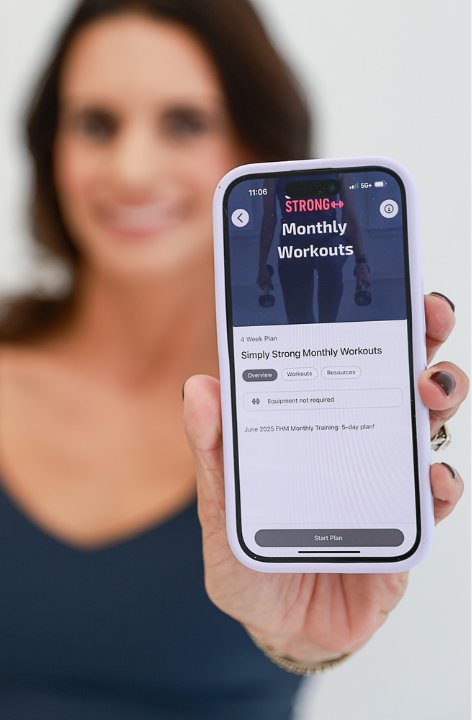
Because the program that works is the one you actually follow. If you’re looking for a strength training plan that’s designed for women over 35 who want to get stronger, leaner, and more confident without spending hours in the gym or needing fancy equipment, give the Simply Strong App a try.