Quick Summary
Building muscle as a woman requires both consistent strength training and nutrition that supports your goals. Learn how to balance protein, calories, carbohydrates, and fats to fuel workouts, support recovery, and build muscle over time.
We hear a lot about how important it is for women to build muscle, but we don’t always fully grasp what it takes from a nutrition standpoint. It takes more than just eating extra protein and spending more time in the gym. Your body needs the right combination of nutrition, consistent strength training, and recovery to build and maintain muscle over time.
I work with so many women who find themselves feeling like they’re spinning their wheels. They’re working hard in the gym, but not seeing the progress they expect. This is usually a great opportunity to look at the nutrition side of things, but it can be equally as important as the strength training side.
The good news is that you don’t need a complicated meal plan or a bunch of expensive supplements to make progress. You can take a very practical approach to nutrition and pair it with structured strength training to start to see the muscle-building response you’re striving for.
In this guide, we'll cover how to eat to build muscle as a woman, how much protein you need, the role of carbohydrates and fats, whether you need to eat more calories, and how to combine nutrition with strength training for the best results.
Can Women Build Muscle Through Nutrition Alone?
No, you cannot build muscle from optimizing nutrition alone; it doesn’t replace the stimulus that comes from strength training or load-bearing activities. When you lift weights, you’re applying a challenge to your muscles that tells them to adapt to the demands placed on them. With consistent training, proper nutrition, and sufficient recovery, your body will gradually become stronger and build muscle.
You can think of nutrition and strength training as two parts of the same process. Strength training provides your muscles with the stimulus to adapt, while nutrition helps support the adaptation.
Unfortunately, just eating more protein without challenging your muscles won’t automatically lead to muscle growth; the same way following a well-designed workout program will be significantly less effective if you’re consistently under-eating or not getting enough protein.
For women who want to build muscle, improve body composition, or maintain strength as they age, both workouts and nutrition deserve attention.
1. Eat Enough Protein to Support Muscle Growth
Protein is essential for muscle repair and growth. When you eat protein, your body breaks it down into amino acids, which are used to build and maintain tissues, including muscle. When you’re strength training consistently, ensuring that you’re getting enough protein throughout the day can help support your progress by fueling your muscles.
Eating a diet rich in high-protein foods like eggs, Greek yogurt, lean beef, cottage cheese, turkey, fish, beans, and chicken will help ensure that you’re fueling your body with enough protein to build and maintain muscle.
How much protein do women need to build muscle?
I recommend that women consume .8-1g of protein per pound of body weight (or goal body weight if overweight). Your individual needs will depend on factors such as your training, body size, goals, and overall calorie intake.
If you’re currently eating lower protein, you don’t have to try to jump to the highest end of your ideal protein range. Start by slowly increasing your protein intake by being aware of adding protein-rich foods to your diet.
I recommend taking your daily protein goal and dividing it by the number of meals and snacks you typically eat in a day so that you can evenly distribute your protein throughout the day and not feel like you’re cramming it in at dinner. When you have a specific protein goal per meal, it helps you to build your meals accordingly.
For example, you might have eggs and Greek yogurt with breakfast, chicken breast with lunch, a meat stick and protein bar in the afternoon, and salmon or lean beef with dinner. By making protein the centerpiece of each of your meals, you have a much higher chance of meeting your goals without feeling like you’re force-feeding yourself protein.
If you're unsure how much protein or how many total calories you should aim for, a personalized macro estimate can be a useful starting point. The custom macro calculator can help you estimate your daily nutrition targets.
2. Eat Enough Calories to Support Your Goals
One of the biggest mistakes women make when trying to build muscle is simultaneously trying to diet and lose body fat. Muscle requires fuel, and while it’s true that certain situations will allow muscle growth and fat loss to happen at the same time, it’s not as common or easily accomplished as you might think.
Calories provide the energy needed for your body to function, exercise, recover, and support muscle growth. If your calorie intake is consistently too low for your activity level, it will be much harder for you to recover from workouts and build muscle. But this doesn’t mean that you will necessarily need to eat in a surplus (intentionally gain weight) in order to build muscle; the right approach will depend on your starting point and your primary goal.
Do you need to eat more calories to build muscle?
It depends. If you’re new to strength training or returning to strength training after a time away, you may be able to build muscle while maintaining your body weight or even while losing some body fat. This is what we refer to as body recomposition.
If you’re more experienced with strength training and your primary goal is to maximize your muscle growth, eating at maintenance or in a moderate calorie surplus will best support your goal.
If fat loss is your main goal, you can (and should!) still strength train to build or maintain muscle, but the rate of muscle growth will be significantly slower when you’re eating in a calorie deficit. A large or prolonged deficit can make muscle gain a lot more difficult, especially as you become more experienced with training.
The most important thing to remember is that your nutrition must match your goal. Many women in midlife grew up with the “eat less, do more” mentality that has kept them in a constant state of yo-yo dieting. Building muscle to protect your body and longevity might take making some important shifts in your nutrition and training that will fly in the face of your previous beliefs about fitness and nutrition.
If you're trying to lose body fat and build muscle, you’ll have to shift your mindset away from eating as little as possible to get you there faster, but that’s not the way muscle-building works. Your body will need enough energy to support training and recovery, and that energy comes in the form of calories.
3. You Need Carbs (Don’t Cut Them Out)
Protein tends to get most of the attention in muscle-building conversations, but carbs matter, too. Carbs are your body’s preferred fuel source for exercise and for replenishing muscle glycogen, which is what your body uses during training. If you often feel depleted during workouts, struggle to maintain your performance or push yourself, or have difficulty recovering, your overall food intake as well as your carb intake are worth evaluating.
Great carb sources include oats, rice, potatoes, whole-grain bread, pasta, beans, fruit, and other grains. Eliminating or seriously limiting carbs while trying to build muscle is like shooting yourself in the foot - it makes it significantly harder to accomplish your goals.
Your carbohydrate needs will vary based on your activity level, training volume, preferences, and total calorie intake. Rather than treating carbohydrates as something to avoid, think of them as one of the tools that helps you train consistently.
4. Include Healthy Fats in Your Diet
Dietary fat is another essential part of taking a balanced and smart approach to building muscle. Fats help provide energy to your body while also helping it to absorb fat-soluble vitamins and supply essential fatty acids.
Great sources of healthy fats include olive oil, avocados, nuts, seeds, nut butters, eggs, and fatty fish. You don’t need to add large amounts of fat to every meal as these foods are typically very calorie-dense, but you shouldn't cut them out either.
The goal is to include a balance of protein, carbohydrates, and fats that supports your overall calorie needs and gives you a sustainable way to eat. This is one reason looking at your overall nutrition is more useful than focusing on a single nutrient. Protein matters, but it doesn't operate in isolation from the rest of your diet - all 3 macros play a role.
5. Build Balanced Meals You Can Repeat
You don’t need fancy or strict meals every day to build muscle as a woman - you’re not doomed to eat bland chicken and rice for the rest of your life just because you have muscle-building goals. I recommend having a few reliable meals you and your family can enjoy that make hitting your daily nutrition goals simple.
There are hundreds of macro-friendly recipes available, but you can also just utilize a plate-building approach. To build a macro-balanced plate, I recommend starting with your protein source and making that the star of the show. Then, you can add in your carb source, fruits or veggies, and some dietary fat as well.
You don't need a different meal plan every day to build muscle. In fact, having a few reliable meals you enjoy can make it much easier to meet your nutrition needs consistently.
For example:
- Breakfast: Eggs with whole-grain toast and fruit, or Greek yogurt with oats and berries.
- Lunch: A chicken and rice bowl with vegetables and olive oil-based dressing.
- Snack: Greek yogurt, cottage cheese, or another protein-rich option with fruit.
- Dinner: Salmon, potatoes, and roasted vegetables, or lean beef with rice and a vegetable side.
These are very simple, basic meals that you can throw together with ingredients you have on hand. You can adjust your portions, ingredients, and meal timing to fit your individual needs, preferences, and schedule.
For a lot of the busy women that I work with, eating the same or very similar meals for breakfast and lunch helps take away a lot of the stress and guesswork when it comes to nutrition. Then, all you have to do is plan your dinners for the week. Find the meals and foods that you love and that your family can enjoy as well, and don’t be afraid to repeat them.
6. Pair Your Nutrition With a Structured Strength-Training Program
Even with a well-balanced diet, muscle growth requires a training stimulus, and this is where your training plan comes into play. Strength training challenges your muscles against resistance. As you place demand on your body, your body will adapt. To keep adaptation happening, you’ll need to apply progressive overload.
Progressive overload can involve increasing the weight you lift, performing more reps with good technique, or improving your control and range of motion. The goal is to make gradual, appropriate progress rather than simply doing more exercises or finishing every workout exhausted. This requires that you repeat exercises and/or general movement patterns so your muscles have the appropriate stimulus to grow and change.
Constantly switching exercises and workouts can make it harder to track performance and recognize when you're getting stronger. Repetition with your workouts is what will allow you to optimize your workouts and your results.
How The Simply Strong App helps you build strength
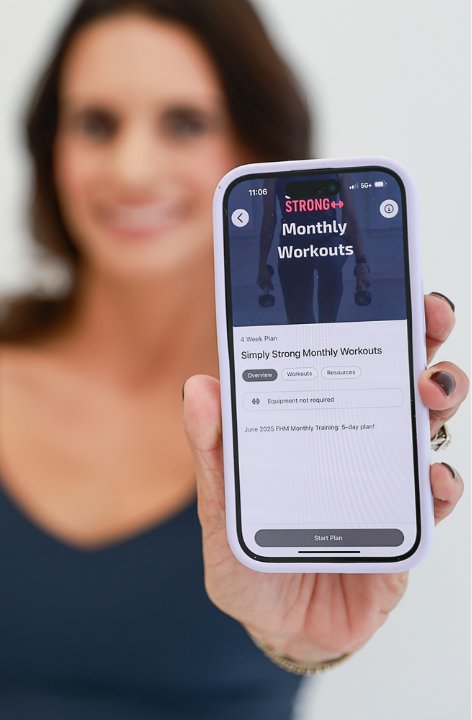
The Simply Strong App was designed to make structured strength training more manageable for women who want to get stronger at home without spending hours each day working out.
The app offers 3-, 4-, and 5-day strength-training plans, with workouts designed to fit into approximately 30 or 45 minutes. The programming follows a progressive approach, allowing you to repeat movements, track your weights and repetitions, and work toward improvement instead of starting from scratch every week.
The equipment requirements are minimal - all you need are dumbbells, bands, and a bench or chair. You follow exercise demonstrations (videos that play on a loop) along with written form cues, do your sets, and track your workouts as you go. The app also includes access to a free customized macro calculator, a library of over 500 macro-friendly recipes, and other nutrition resources and education.
With the Simply Strong App, your workouts and nutrition work together. Simply Strong helps you establish a consistent strength-training routine, while your food choices help support your training, recovery, and overall goals.
7. Give Your Body Time to Recover
While strength training is a vital part of the muscle-building process, so is rest and recovery. Muscle actually grows during rest, not during your workout. During your workout, you create tiny tears in your muscle fibers. Those fibers then repair and rebuild later while your body is resting and when you have ample nutrition to support it.
This means that it’s essential to eat enough protein and calories, get adequate sleep (7-9 hours, ideally), and make space in your training routine for a minimum of two rest days per week. Training more frequently does not equate to better results when it comes to strength training and muscle building.
For many women, strength training three or four days per week is a practical way to train consistently while leaving time for rest and other forms of movement. You can further support your recovery and results by maintaining a balanced diet, staying hydrated, and adding gentle movement like walking to your daily routine.
8. Track Progress Beyond the Scale
If you have a goal of building muscle, stepping on the scale and relying on that solely for feedback and progress updates isn’t the best approach. Muscle gain and fat loss can happen simultaneously, especially for people who are newer to strength training. As a result, you might notice improvements in your strength, your clothes fitting better, more energy, or your overall body composition changing for the better without ever seeing any dramatic changes on the scale.
This is why it’s really important to utilize other progress markers and ways of measuring improvement, such as:
- Tracking the weights and reps you complete during workouts.
- Noticing when exercises feel more controlled or manageable.
- Taking occasional progress photos under consistent conditions.
- Paying attention to energy, recovery, and workout performance.
- Monitoring body weight or measurements over time if those metrics align with your goals.
If your strength is improving, your workouts are consistent, and you're eating in a way that supports your goals, those are meaningful signs of progress even when the scale moves slowly.
Final Thoughts
If you’re a woman with a goal of building muscle, you’re right where you need to be! The most important thing to do is to start with the basics first. Make sure you’re eating enough to support your goals, make protein a priority with every meal, don't skip or overly restrict carbs or fats, and follow a structured strength training program that allows you to continue to make progress over time.
The Simply Strong App can help you put the training side into practice with structured, progressive strength workouts, workout tracking, exercise demonstrations, and a library of high-protein recipes. Use the in-app tools to get your customized macro plan and pair that with the hundreds of recipes in the app to build a solid foundation of workouts and aligned nutrition that will create the foundation for building strength and supporting muscle growth.
Take the Simply Strong quiz to see if the Simply Strong App is right for you!