
Quick Summary
Starting strength training during perimenopause doesn’t have to be complicated. Learn why lifting weights matters, how to begin, and follow this beginner-friendly full-body dumbbell workout designed to help women build strength and confidence.
Perimenopause still feels like this space of conflicting information and mass confusion, especially when it comes to fitness. We see some experts recommending more cardio and HIIT while others are saying to lift heavier and rest more. It can feel overwhelming, to say the least.
But here’s what I want you to know: you don’t need a complicated workout routine to build strength, support your metabolism, and feel great in your 40s and beyond.
Strength training is one of the most powerful tools women can use during perimenopause, and getting started is so much less complicated than you think. You don’t need a gym membership, hours of free time, or to already be “in shape” before you begin. All you need is an understanding of why strength training is important and a plan that guides you the whole way.
Why Strength Training Matters During Perimenopause
Not every woman will experience perimenopause the same way, but most women do experience it as a season of change. As hormones fluctuate, many women begin to notice changes in their body composition, recovery, energy levels, and even how their bodies respond to workouts.
Of course, strength training isn’t a magic fix for everything, but it is one of the best ways to support your body through this transition.
Consistent strength training can help you:
- Build and maintain lean muscle
- Support your bone health
- Improve strength and confidence
- Maintain a healthy metabolism
- Feel stronger in everyday activities
- Improve body composition over time
The goal isn’t to stop or prevent aging; it’s to build a body that supports you for the long term.
What Makes a Good Beginner Strength Workout for Perimenopause?
A good beginner workout will focus on the basics, which include:
1. Full-body movements
Contrary to what you might have been led to believe, when you’re new to strength training, you don’t need dozens of "fun and exciting" exercises.
The best place to start is with the foundational movement patterns:
- Squat
- Hinge
- Push
- Pull
- Carry
- Core stability
These movements train the entire body and help you build a strong foundation from which you can build.
2. Progressive overload
One of the biggest mistakes beginners make is doing random workouts without a plan. Even trying to follow workout apps that offer new workouts all the time can present a problem for women in perimenopause.
A workout that makes you sweat isn’t always a workout that helps you get stronger. True strength comes from gradually challenging your muscles over time, and in order to do that, you’ll need to apply progressive overload.
That might mean:
- Increasing your dumbbell weight
- Adding more reps
- Improving your form
- Increasing your range of motion
You don’t need to max out your weights; you just need to give your body a reason to adapt. In this article, I talk about how to know when to increase your sets, reps, and weight.
3. Consistency over intensity
More is not better during perimenopause. In fact, trying to do too much usually backfires pretty hard during this stage of life where we’re already overloaded with life responsibilities - adding too much fitness stress is not the answer.
Committing to a workout routine you can stick with 3-5 days per week will always beat a plan that leaves you exhausted and burned out after two weeks.
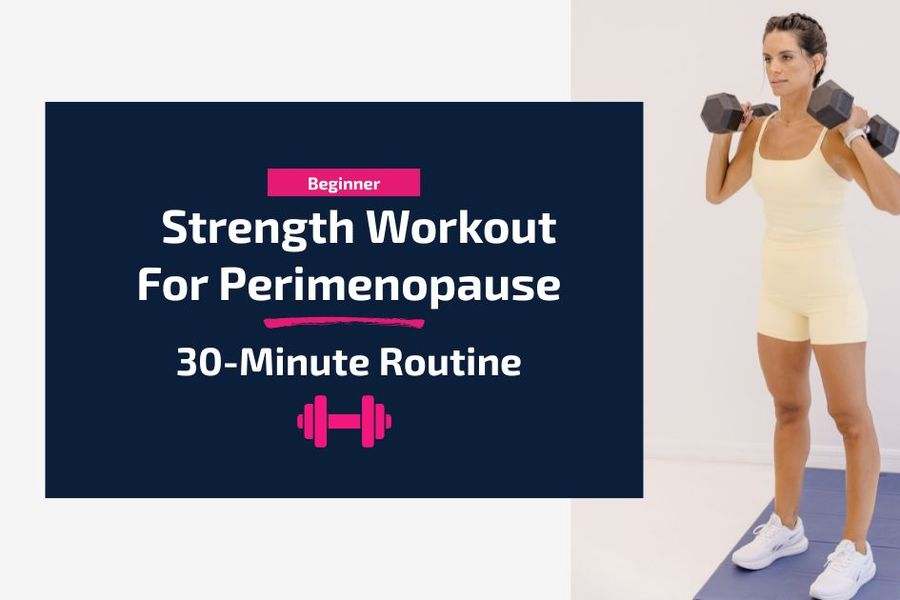
Beginner Perimenopause Strength Workout (30 Minutes)
Ready to try a beginner strength workout that’s perfect for women over 35? This workout can be done from home with a couple of pairs of dumbbells.
Here’s how this workout works:
-Perform each exercise for 8- 12 reps
-Complete 2–3 rounds
-Rest as needed between exercises (60-90 seconds is a good place to start)
1. Goblet Squat
Muscles worked: Quads, glutes, core
Hold one dumbbell at your chest. Sit your hips down and back like you’re sitting into a chair. Drive through your feet to stand tall.
Beginner modification: Use a lighter weight or perform bodyweight squats.
2. Dumbbell Romanian Deadlift
Muscles worked: Hamstrings, glutes, back
Hold dumbbells in front of your thighs. Push your hips back while keeping your spine neutral. Squeeze your glutes as you return to standing.
Focus: Think “hips back” rather than bending forward.
3. Incline Push-Up
Muscles worked: Chest, shoulders, triceps, core
Place your hands on a bench, countertop, or sturdy surface. Lower your chest toward the surface and press away.
Beginner modification: The higher the surface, the easier the movement.
4. Single-Arm Dumbbell Row
Muscles worked: Back, shoulders, arms
Pull the dumbbell toward your hip while keeping your shoulder away from your ear. If needed, support yourself with a bench or chair.
5. Dead Bugs
Muscles worked: Deep core muscles
Lie on your back with your arms extended and knees bent. Slowly lower your opposite arm and leg while keeping your core engaged.
How Many Days Per Week Should Beginners Strength Train During Perimenopause?
If you’re just starting out with strength training or are coming back to it from a long break, I recommend beginning with 3 workouts per week, as that’s plenty to make progress, but not so much volume that you’re likely to get overwhelmed.
There are a couple of different workout “splits” I recommend:
- A 3-day full-body workout split
- A 3-day body part split (lower body, upper push, upper pull)
On the other days, I recommend focusing on walking, mobility, or activities you enjoy.
What Weight Should Beginners Use?
One of the most common questions I get is “how heavy should my dumbbells be?” The answer is that it depends on your current strength level. The dumbbells you choose should feel challenging while allowing you to maintain good form.
A good guideline to follow is:
- The last 2–3 reps should feel difficult
- You should still be able to complete the movement safely
- You should not feel like you’re straining or holding your breath
Many women underestimate what they’re capable of, especially when they’re new to lifting. A lot of women also hold the common misconception that strength training will make you bulky if you use too heavy of weights (it won’t). You’re stronger than you think, but start from where you’re comfortable and work your way up.
Common Beginner Strength Training Mistakes During Perimenopause
Mistake #1: Only doing cardio
Cardio is great for heart health and overall wellness, but it doesn’t replace strength training. Muscle is built by challenging your muscles by adding resistance. The more muscle you build on your frame, the healthier your body is - from a metabolic standpoint as well as an aging standpoint.
Mistake #2: Changing workouts every day
Changing your workouts up all the time sounds fun, but constantly doing new workouts makes it difficult to track progress. Repeating movements, making increases, and tracking your progress is where results happen.
Mistake #3: Thinking you need to destroy yourself
A workout does not need to leave you an exhausted, sweaty mess on the floor to be effective. The goal is to build muscle and confidence, not punish yourself.
The Best Beginner Workout Is the One You’ll Actually Do
At the end of the day, starting a strength training routine during perimenopause is one of the best things you can do - and it doesn’t need to be complicated!
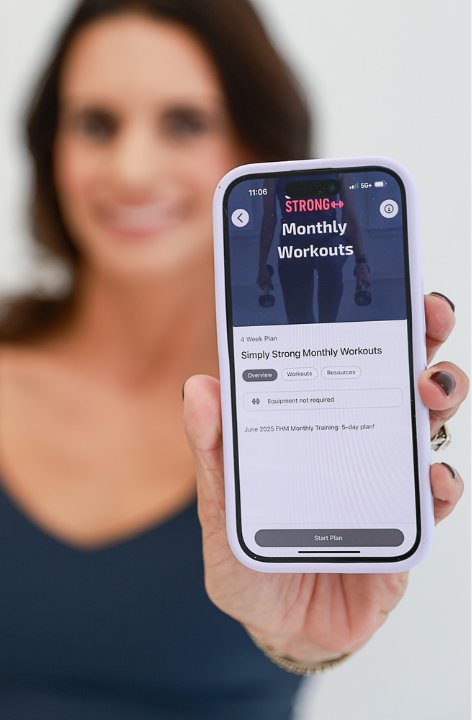
All you need is a consistent plan that helps you build strength one workout at a time. That’s exactly what we do inside the Simply Strong App. I build our workouts specifically for women 35+ who want simple, effective strength training that they can do from home with limited time and minimal equipment.
Want to see if the Simply Strong App is a good fit for you? Take my 2-minute quiz to see if you’re ready! At the end of the quiz, you’ll get a coupon to get 50% off your first full month of training in the app!