Quick Summary
Strength training after 40 helps you hold on to muscle, support your bones, and feel strong in everyday life. This guide covers how to start, how heavy to lift, how often to train, the best exercises, joint-friendly training, warm-ups, nutrition, and what results look like over time.
At some point, most women start to feel a shift in their body’s response to exercise around the midlife mark (age 40+). And if this is you, you’re not imagining this shift, and you’re not alone. This is often the season when women begin to realize that the exercise and weight loss strategies that once worked no longer deliver the same results.
Fat loss starts to feel harder. Muscle mass becomes harder to maintain. Recovery takes longer. And energy fluctuations start to become more apparent than ever. For many women, this is also the time when perimenopause starts to enter the conversation.
The answer, however, is not to hit the ground running with intensity, more cardio, or more restriction; it’s to shift your approach and maybe your perspective. Strength training becomes a pillar for women in midlife who want to feel healthy, strong, capable, and confident in their bodies.
But not just any strength training, it needs to be done in a way that supports your changing body, hormones, and life. There are some strength training basics for women in midlife that will make this entire process easy to understand and follow.
Why Strength Training Matters More After 40
As we move through our mid-thirties and beyond, we naturally begin to lose muscle mass if we’re not actively working to maintain it. This is caused by age, hormonal changes, and lifestyle factors, and it impacts far more than what your body looks like.
Muscle mass plays a key role in your metabolism, blood sugar regulation, joint stability, bone density, and your overall resilience. Weight resistance training helps to slow muscle loss, improve functional strength, and support your long-term health - especially during perimenopause when hormonal fluctuations can make the body feel unpredictable.
Maintaining and strengthening your muscle mass doesn’t require extreme workouts or hours in the gym. Rather, it requires consistency, intention, and a plan that includes some strength training basics and fundamentals for women in midlife.
Muscle and Bone Health
Specifically, weight-bearing activities like resistance training place a mechanical demand on your bones. Exercise can strengthen bones and muscles, help maintain bone density, and improve balance and coordination. And this matters a lot for women in particular because we’re at a greater risk for osteoporosis than men.
One major factor that can contribute to bone loss is declining estrogen levels around menopause. For this reason, women need to be extra diligent about building and maintaining bone health before and around menopause, as it's an important part of reducing future risk.
I cover this in more detail in my post on muscle and bone health for women over 40.
What Strength Training Really Is (and What It Isn’t)
Strength training means using resistance to challenge your muscles so that they adapt and grow stronger. Resistance can come from anything - dumbbells, resistance bands, or even your own body weight. It can be done from home, on your own schedule, and without a lot of space or complicated equipment.
Efficient, effective strength training is not constantly chasing exhaustion or soreness. It’s not random workouts that change every day. And it’s not trying to turn every session into a cardio, calorie-burning workout.
In midlife, effective strength training focuses on repeating key movement patterns, allowing adequate recovery time, and gradually increasing the challenge over time.
How to Get Started
Starting strength training after 40 doesn’t need to be complicated. Here are the steps I walk beginners through:
- Get your mindset right
- Get familiar with the basics
- Get the right equipment
- Focus on form
- Add 2-5 strength training sessions per week
- Track your progress (beyond the scale)
- Get support and a plan
The number of days you work out per week will depend on your lifestyle, goals, preferences, and recovery. Generally speaking, a beginner should start with 2-3 workouts per week. I recommend full-body workouts with at least one full rest day between workouts.
For a step-by-step walkthrough, see how to start strength training in your 30s, 40s, or 50s, or jump right in with my beginner strength training workout for women.
How Heavy Should Women Over 40 Lift?
One of the easiest ways to determine whether your weights are heavy enough is to pay attention to how the last few reps in your set feel. For example, let’s say your workout calls for 10 dumbbell rows. The first several reps should feel fairly manageable, but by the final few reps, you should notice that the exercise is feeling a lot more challenging. You should still be able to complete the exercise with control, but you shouldn’t feel like you could easily do another 10 reps no problem. If that’s the case, then you’ll know you’re not lifting heavy enough.
On the other hand, if you are getting to your last few reps and you need to “swing” the dumbbells, shorten the movement significantly, or sacrifice your technique just to finish, the weight you’re lifting is too heavy, or you need to reduce the number of reps you’re doing.
My guide on how heavy women over 40 should lift walks through starting weights, reps in reserve, and when to go up.
How Progressive Overload Works at Home
Progressive overload is one of the most important, but also most misunderstood principles of strength training. It simply means giving your muscles a reason to adapt by slowly increasing the challenge placed on them.
At home, progressive overload is often subtle. You might perform an exercise with more control or better form than you did before. You might complete a few more reps, add an extra set, or increase your weights. But here’s the thing: none of these changes and adaptations need to be dramatic to be effective.
Progress and growth come from consistency and progression, not from constantly seeking to do something new. The concept that you need to “keep your muscles guessing” is false.
The Best Strength Training Exercises
It has never been more tempting to spend your workouts doing dozens of different isolation exercises - you know the ones that get really popular and trendy on social media? But compound movements, aka exercises that work multiple muscles at once, help you:
- Build total-body strength
- Burn more energy during your workout
- Improve coordination and balance
- Save time
- Create more opportunities for progressive overload
These five exercises cover nearly all the major movement patterns you ask your body to perform in your daily real life:
- Goblet squat: Squat
- Romanian deadlift: Hinge
- Shoulder press: Push
- Bent-over row: Pull
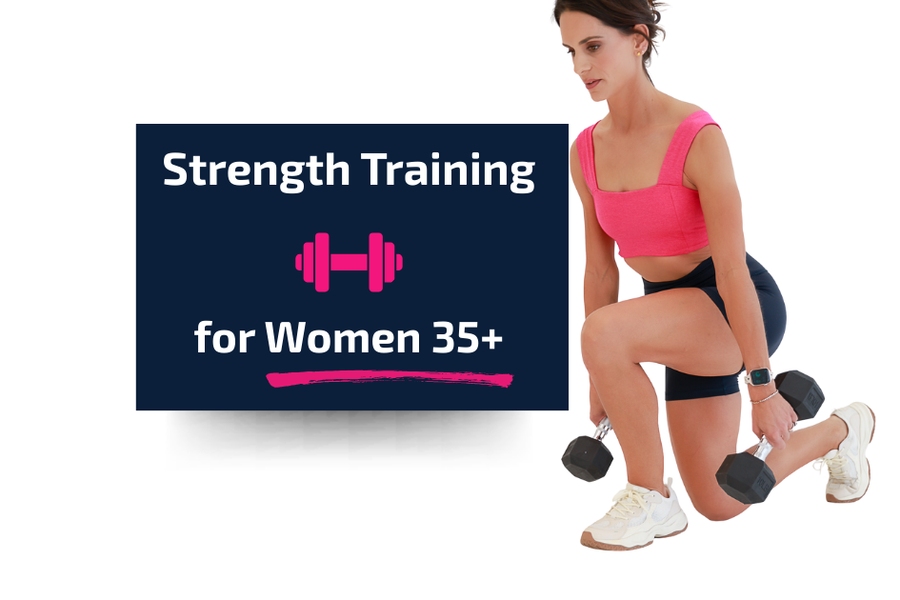
- Reverse lunge: Single-leg strength
You’ll find form tips for each one in the 5 most important dumbbell exercises for women. Want more? Try my best leg exercises for women over 40 or these exercises for flabby arms over 40.
How Often Should You Strength Train?
For most women in midlife, strength training just two to four times per week is both effective and realistic. More does not automatically mean better, especially during perimenopause when your recovery capacity can fluctuate a lot.
The goal of strength training in midlife is to feel challenged but also capable - not depleted and exhausted. Embracing rest days is a big part of the process. They’re not setbacks or failures, but a necessary part of the adaptation and growth process.
Not sure which schedule fits your week? Compare 3-day vs 4-day vs 5-day strength training.
Joint-Friendly Training
Joint-friendly training means choosing exercises, loads, ranges of motion, and volume that allow you to challenge yourself while still mitigating unnecessary stress on your joints.
Instead of approaching an exercise with the question “Is this exercise bad for my joints?” A better question would be “Can I perform this exercise with good control, appropriate loading (weight), and without pain?”
There’s more on this in my guide to joint-friendly workouts for women over 40.
Warm Up Before You Lift
A short warm-up gets your joints moving and your muscles ready before you lift. A few tips:
- Spend 5–10 minutes on your warm-up, don’t rush it.
- Move slowly, focus on your form, and breathe deeply.
- Keep in mind that warmup is meant to prepare you for your workout and energize you, not drain you - keep it light and intentional.
Start with my 5 warm-up moves every woman over 40 should be doing.
Why You Can Work Out Consistently and Still Not Feel Strong
There’s a point in most women's midlife journey when they start to feel frustrated by a lack of progress, despite being consistent. This is rarely a motivation problem; it’s usually more to do with the approach to fitness they’re taking.
When you’re following workouts that change constantly, you’re not giving your body the chance it needs to adapt. When strength work is rushed and treated like a cardio workout, your muscles don’t get enough stimulus to grow stronger. And when recovery and nutrition are overlooked (things that become even more impactful during perimenopause), results are often stalled.
Feeling strong and actually looking the part comes from focused, repeated effort over time, not from doing more or pushing harder - concepts that were ingrained in most midlife women throughout their teens and early twenties.
Eating to Support Strength Training During Perimenopause and Beyond
Strength training places real demands on your body, and those demands only increase during midlife and perimenopause. Under-fueling, not prioritizing protein, or chronically dieting can make recovery and building strength significantly more difficult.
Supporting your strength goals with your nutrition doesn’t require perfection or rigid rules. It simply requires that you eat enough to recover, prioritize protein to support muscle and satiety, and utilize carbohydrates to fuel your workouts and your daily energy needs. It’s understanding that food isn’t something to be earned or restricted, but rather an integral part of the process.
Protein is a big piece of this, and I break down how much you need in protein needs for women over 40. For meal ideas, see how to eat to build muscle as a woman.
Strength Training While Using GLP-1 Medications
GLP-1 medications have become increasingly more common and show no signs of slowing down, and many women in midlife are navigating how to incorporate these into a healthy and balanced lifestyle.
Because the main goal of most women starting a GLP-1 journey is weight loss, and rapid weight loss can include muscle loss, strength training becomes even more important for women using GLP-1 medications as a tool on their journey. Appetite suppression can also make it more difficult to consume enough protein or overall energy, which directly affects recovery and the ability to maintain muscle and a healthy metabolism.
Strength training while taking a GLP-1 medication helps to protect lean muscle, support metabolism, and promote long-term sustainable and results. When paired strategically with adequate fueling and rest, it can be a powerful tool in your journey and one that shouldn’t be linked with shame or feelings of cheating.
Why Go-At-Your-Own-Pace Strength Training Works Better
Follow-along workout like Beachbody and FasterWay to Fat Loss can be really motivating, but they also come with pressure to keep up, move quickly, or push past fatigue. In midlife, that pressure can quietly undermine your consistency and recovery, hindering your results and ability to gain strength.
Workouts that are “go-at-your-own-pace” allow you to focus on form while adjusting your intensity based on how you feel that day. This style of workout allows you to fit your strength training into real life without feeling like you’re behind or needing to keep up with unrealistic expectations. Plus, when workouts work with your body, not against it, consistency becomes easier to maintain.
How Long Does It Take to See Results?
So, when do your muscle-building efforts finally start to pay off? For most women, noticeable changes begin to appear around the 4-8 week mark of consistent training. Typically, this looks like:
- Slight muscle definition (seeing a muscle “pop” a bit)
- Feeling firmer or stronger
- Improved posture
- Increased confidence in your movements
It’s important to keep in mind that your specific timeline will depend on a number of factors like nutrition, training consistency, where you’re starting from, genetics, and your overall lifestyle - these all play a critical role in your muscle-growth timeline.
Here’s a closer look at how long it takes women to build noticeable muscle.
What Strength Training Success Really Looks Like
Strength training success in midlife isn’t defined by a number on the scale or perfect consistency. It’s defined by feeling stronger in your everyday life, moving more confidently, and trusting your body again. It’s about building strength that supports the life you’re living, not chasing an idealized version of fitness and what you think that should look like. It’s about being realistic about what’s maintainable while knowing that results are inevitable if you show up for yourself and have an effective plan to follow.
Frequently Asked Questions
Is it too late to start strength training after 40?
Absolutely not! Women can build strength and muscle well beyond age 40. If you're new to strength training, start with manageable weights, learn proper technique, and progress gradually. Consistency and effort matter much more than how early you started.
How much weight should beginners start with?
Beginners should start with weights that allow them to learn the movements and complete their reps with control. Some may start with three- to five-pound dumbbells for certain upper-body exercises, while others may comfortably use heavier weights. Start with a manageable load and adjust based on how the set feels.
Should you lift heavy or do more reps?
Both approaches can be effective. Heavier weights are useful for building maximal strength, while lighter weights can also build muscle when the sets are sufficiently challenging. Many women find moderate weights and a range of roughly 8-12 repetitions practical for common strength exercises, but it’s not a hard and fast rule.
Will lifting weights make you bulky?
Building noticeably “bulky” muscles as a woman is extremely difficult without specific training and nutrition protocols that go far beyond a standard strength training program.
I bust this myth and four others in common fitness myths that keep women stuck after 40.
How Simply Strong Supports You
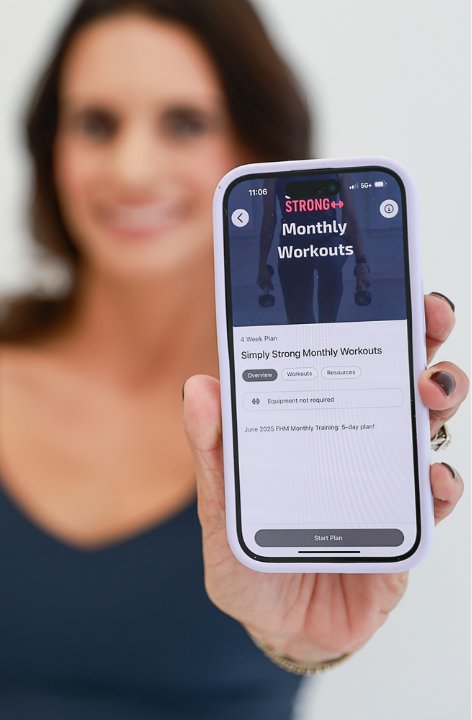
The Simply Strong App was created specifically for women navigating midlife and perimenopause. The workouts are home-based, requiring only dumbbells and bands, are structured, yet flexible, and are built around progressive overload but without any pressure or extremes.
Simply Strong is about strength training that meets you where you are and supports you where you’re going. It’s about leaning into the fact that you don’t need to do more. You don’t need to train harder. You don’t need to fight your body…You need strength training basics that support your changing body, honor your recovery, and fit into your real life. These are the foundations of strength in midlife, and that’s exactly what Simply Strong exists to help you build.